From South Shields to Simonside
John Barbour opened his business in Market Place, South Shields, supplying oilskins to the sailors and fishermen of the North East. His son Malcolm produced the first mail order catalog, and by 1917 it accounted for almost 75 percent of the company's business.
After John's death, his young widow Margaret joined the board. She went on to become chairman and was later made a Dame Commander. The company is still family-owned, now in its fifth generation, and the factory remains in Simonside. Barbour holds Royal Warrants, the latest granted by the King in May 2024.
Waxed cotton and patina
Barbour's philosophy is plain: clothing must suit its purpose, and every detail has to earn its place. Waxed cotton is the clearest expression of that idea. Ian Bergin, the brand's director of menswear, describes how the wax molds to the body. The oil that dries into the fabric builds the patina.
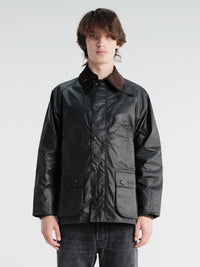
The look is easy to recognize: a corduroy collar, a tartan lining, generous pockets. Wax for Life, the brand's umbrella for re-waxing and repair, keeps jackets in circulation, and in 2021 Barbour marked 100 years of re-waxing.
Barbour wax jacket icons
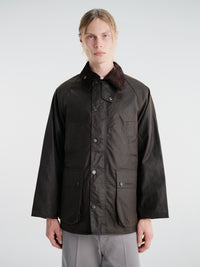
Margaret Barbour designed the Bedale as a light, thornproof, short jacket for riding. The Beaufort followed as a country jacket, designed by Margaret Barbour, with a full-length rear pocket. The range includes the Classic Bedale in Olive, the Bedale in Sage and the OS Bedale in Dark Brown.
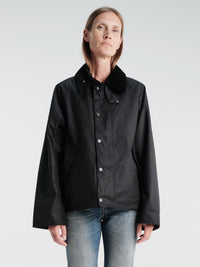
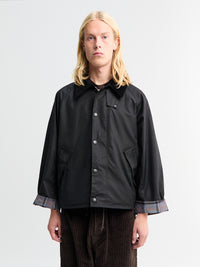
The Modified Ursula takes its shape from the submarine suit of 1940. The Modified Transport comes in black or sage, the Blouson Transport in black. The same heritage runs through both the men's and women's lines.
Quilting and the modern Barbour
Quilted jackets are the second pillar of the heritage. Vertical quilting comes from the submarine suits, and the Liddesdale quilt of 1994 is still a bestseller. Quilt for Life repairs are done in South Shields.
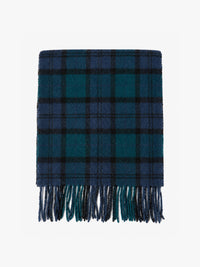
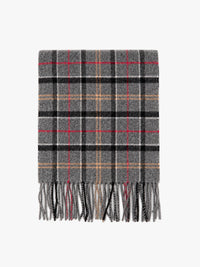
Barbour International grew out of the 1936 motorcycle suit made for the International Six Day Trials, later worn by Steve McQueen. It became a stand-alone brand in 2013. Heritage+ brings A-line riding wax, oversized shapes and tartan linings, and Re-Loved gives old jackets a second life. Tartan lambswool scarves and waxed cotton hoods extend the outerwear.
Barbour in fashion
Dame Margaret has received a Special Recognition Award from the British Fashion Council and a Lifetime Achievement Award from Drapers. The label has collaborated with GANNI, Gucci Continuum, ALEXACHUNG and Palace, and it has its own Steve McQueen collection. Stoy carries Barbour for men and Barbour for women.
FAQ
Is Barbour luxury or premium?
Barbour sits in the premium heritage space. It is a family-owned British maker with royal warrants and hand-finished wax jackets from its Simonside factory. Its standing in fashion reaches further through collaborations with GANNI and Gucci Continuum.
Why is Barbour so expensive?
The Bedale is still made by hand in South Shields, in waxed cotton that can be re-waxed and repaired. Wax for Life and Quilt for Life extend a jacket's life.
Are Barbour jackets worth it?
The brand's principle is that clothing must be used and must last. Waxed cotton develops a patina over years, and the factory re-waxes and repairs jackets, which is why many are worn for decades.
Is Barbour a British brand?
Yes. Scotsman John Barbour founded it in South Shields in North East England in 1894, and the headquarters and factory remain in Simonside, South Shields.
What is Barbour International?
It grew from the one-piece motorcycle suit of 1936, created for the International Six Day Trials. It became a stand-alone brand in 2013 with its own identity, and Steve McQueen is closely tied to its story.