Material quality
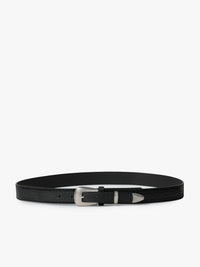
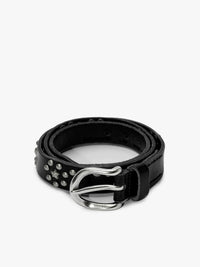
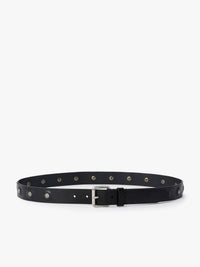
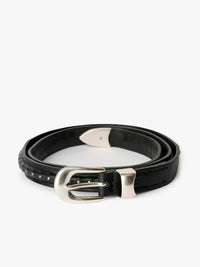
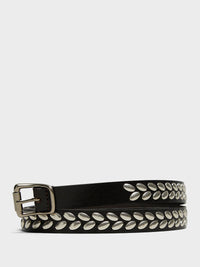
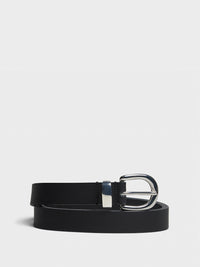
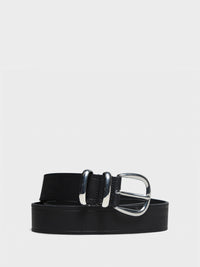
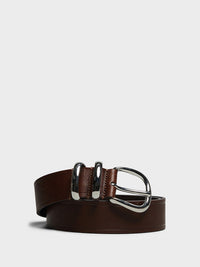
Full-grain and top-grain leather are the benchmarks for any serious leather belt. Both use the outer layer of the hide and develop a patina over time rather than cracking or peeling the way bonded or split-leather alternatives do. A well-constructed leather belt features a single solid hide, not layered scraps, with stitched or riveted hardware attachment points and a buckle bar that distributes tension evenly. That last detail matters more than most people realise, as separation at the clasp is the most common failure point on lower-quality pieces.
Suede offers a softer, more textural alternative to smooth leather and suits relaxed tailoring particularly well. The weight and hand-feel of the leather are reliable indicators of density and longevity; a belt that feels substantial in the hand typically wears better over time. Our selection reflects the same emphasis on authenticity and craftsmanship applied across our full assortment of men's accessories, carrying belts from brands where material sourcing and construction are central to the design rather than an afterthought.
Premium leather goods from regions with established craft traditions often reflect how hides are tanned, finished, and stitched. These origins are worth paying attention to when evaluating whether a belt genuinely delivers on its material claims.
Belt styles
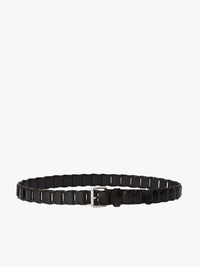
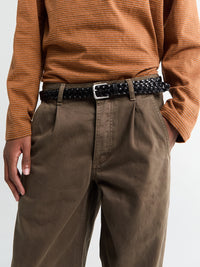
Dress belts are typically narrow, smooth-leather, and paired with formal trousers and Oxford shoes. Casual belts run wider, tolerate texture including braided, woven, or pebbled leather, and work with denim, chinos, and relaxed tailoring. Work and outdoor belts prioritise width and thickness for load-bearing use. Woven belts bridge sportswear and casual dressing with a lighter, more relaxed character suited to warmer months or off-duty menswear.
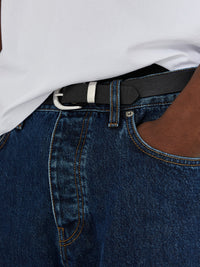
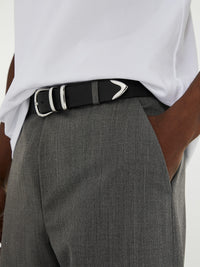
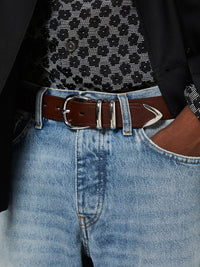
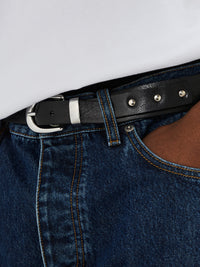
The fit rule that applies across all styles is that the belt should pass through all trouser loops comfortably and fasten on the middle hole, leaving two holes on either side for adjustment. A metal buckle finish, whether brushed silver, polished gold, or matte black, should also be considered in relation to other hardware in the outfit. Our range spans dress and casual occasions, making it a single destination for discovering belts suited to a full wardrobe rather than a single context. Browse the entire collection of menswear to see how belts sit alongside the rest of our selection.
Durability and care
A high-quality leather belt should outlast many seasons with basic care. Key durability indicators include a solid brass or stainless steel buckle that resists tarnishing and bending, reinforced stitching at stress points, and leather that is at least 3 to 4 mm thick. These are the construction details that separate the best quality men's belts from pieces that look the part initially but deteriorate quickly under regular use.
Proper care extends lifespan significantly. Conditioning the leather two to three times per year prevents drying and cracking, and storing the belt rolled or hung rather than folded maintains its shape over time. Some belt makers back their products with multi-decade or lifetime warranties, a strong signal of confidence in construction. Investing in one well-made belt typically costs less over five years than replacing lower-quality alternatives annually, which is worth considering when weighing how much is a belt worth spending.
Brand selection
The men's belt market spans mass-market basics to considered pieces from high-end brands with genuine craft credentials. Brand selection matters when durable quality and design are the priority. At Stoy, we carry a mix of established names and independent designers, applying the same curatorial philosophy here as across our broader selection of leather goods and accessories for men. Each brand represented has earned its place through design integrity and material standards, not simply through recognition.
Whether the preference is for a minimalist best black belt for men, the warmth of the best brown leather belt, or something with a distinctive handcrafted detail, browsing by brand is a useful way to find a belt that aligns with a broader wardrobe aesthetic. We also carry versatile belts for women for those looking to shop across categories. Explore the latest arrivals in men's fashion to see what has just landed alongside our belt selection.
Frequently asked questions
How do I know what size belt to buy?
The standard rule is to size up by two inches from your trouser waist size. If you wear 32-inch trousers, choose a 34-inch belt. This ensures the belt fastens on the middle hole, the ideal fit point, leaving two holes on either side for adjustment. If you are between sizes, round up rather than down. Belt length is measured from the fold where the leather meets the buckle to the middle hole. Some brands offer belts in small, medium, and large rather than inch measurements, in which case the brand's own size guide is the most reliable reference.
What width belt should I choose?
Belt width should match the trouser loops and the formality of the occasion. Dress trousers typically have narrower loops suited to a 25 to 32 mm belt. Casual trousers and jeans usually accommodate a wider 35 to 40 mm belt. As a general rule, the more formal the outfit, the narrower the belt. A mid-width belt around 32 to 35 mm is the most practical option if you want one belt to work across both smart and casual looks.
How do I care for a leather belt to make it last longer?
Condition the leather two to three times per year using a dedicated leather conditioner or cream to prevent drying, cracking, and stiffness. Avoid prolonged exposure to water; if the belt gets wet, allow it to dry naturally away from direct heat. Store the belt rolled or hung rather than folded, which can create permanent creases. Clean surface dirt with a slightly damp cloth before conditioning. For suede belts, use a suede brush to restore the nap and a suede protector spray to guard against moisture. With this basic routine, a quality leather belt should remain in good condition for many years.
What is the difference between full-grain and bonded leather belts?
Full-grain leather is the highest quality available. It uses the outermost layer of the hide, retains the natural grain, and develops a patina over time. It is dense, durable, and breathes well. Top-grain leather has the surface sanded to remove imperfections, making it more uniform in appearance but slightly less durable than full-grain. Bonded leather, by contrast, is made from leather scraps and fibres compressed with adhesive and coated with a polyurethane surface. It looks like leather initially but tends to peel, crack, and separate, particularly at the buckle attachment, within one to two years of regular use. For a belt that lasts, full-grain or top-grain leather is the clear choice.
What are some good quality belts for men?
Good quality men's belts share a few consistent characteristics: full-grain or top-grain leather rather than bonded or split leather, solid metal hardware with secure attachment to the strap, reinforced stitching at stress points, and leather that is at least 3 to 4 mm thick. Belts that develop a patina over time rather than cracking or peeling are a reliable sign of genuine leather. Brands that design and specify their own hides, or manufacture in regions with strong leather traditions, tend to produce more durable and better-wearing belts. A quality belt should comfortably last five or more years with basic care.