Sock materials
Merino wool is widely regarded as the benchmark fibre for socks. It thermoregulates naturally, pulling warmth toward the foot in cold conditions and releasing heat when temperatures rise. It is also moisture-wicking by nature, drawing perspiration away from the skin, and its inherent odor resistance means it stays fresh through extended wear without needing to be washed after every use. For men who want one material that performs across most conditions, merino wool is the clearest answer.
Synthetic yarns such as polyester, nylon, and acrylic serve a different purpose. They dry faster than natural fibres, add durability to high-abrasion zones, and keep weight low, making them well suited to athletic and high-activity use. Cotton sits at the other end of the spectrum: breathable and comfortable at rest, but prone to retaining moisture during intense movement, which limits its usefulness for anything beyond casual or low-exertion wear. Premium blended socks draw from each fibre category, combining softness, stretch recovery, and longevity in a single construction. Our selection prioritises these premium materials and the craftsmanship behind them over fast-fashion alternatives.
Sock height
A useful starting point is that your sock should always sit higher than the collar of your shoe. No-show socks are cut to stay invisible with low-cut trainers and loafers, making them the go-to for warm-weather casual dressing. Quarter socks offer a small band of ankle coverage that works well with running shoes and lighter hiking footwear, providing just enough structure without adding bulk. Crew socks are the most versatile height in any man's rotation, sitting mid-calf and pairing cleanly with dress shoes, casual boots, and sneakers alike.
For taller footwear, boot socks (over-the-calf) provide extended leg coverage, additional cushioning through the shaft, and better insulation for outdoor and work contexts. Each height serves a distinct purpose, and having a few options across the range means your socks work with your shoes rather than against them. Browse our curated selection of socks to find styles across every height.
Style options
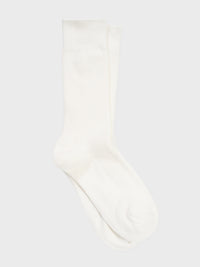
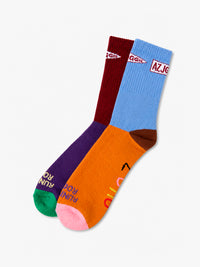
Men's socks have moved well beyond the utilitarian basics. Solid, tonal styles in neutral shades remain the foundation of a dress or business wardrobe, pairing cleanly with tailored trousers and leather shoes for the boardroom or a formal occasion. Patterned socks, whether stripes, geometric motifs, or subtle textures, introduce personality into a smart-casual outfit without pulling focus from the rest of the look. For more casual contexts, bolder graphic or novelty socks function as a deliberate point of expression.
Our curation reflects the individuality and authenticity that define how we select across every category, from refined and understated to design-forward and expressive. These are stylish men's socks sourced from brands with genuine creative vision, not seasonal filler. Discover more within our essential accessories for men or explore the latest men's fashion arrivals.
Activity and use
Different activities place distinct demands on a sock's construction. For everyday urban wear and office environments, a mid-weight crew sock in a quality blend delivers all-day comfort without adding unnecessary bulk inside the shoe. Running and athletic use benefits from lightweight, moisture-wicking construction with targeted cushioning underfoot and a performance fit that keeps the sock from shifting during movement. Hiking and outdoor activities call for thicker cushioning through the heel and ball of the foot, reinforced zones at high-abrasion points, and merino wool's natural thermoregulation across changing conditions.
Casual and at-home wear shifts the priority toward softness and a relaxed fit rather than technical performance. Choosing a sock matched to its intended use, rather than defaulting to a single pair for everything, improves comfort in a meaningful way and extends the life of both the sock and the shoe it sits inside. We also carry versatile socks for women for those shopping across the wardrobe.
Fit and sizing
Shoe size is the primary guide to sock sizing. Most brands map their sizing directly to standard shoe size ranges, so the process is straightforward. A well-fitting sock should lie flat against the foot without bunching, slipping down the heel, or feeling constrictive around the ankle. Socks that are too large will gather inside the shoe and increase blister risk; socks that are too small will restrict circulation and wear through faster at the stretch points.
Men's socks are typically knit wider and with more volume through the foot than women's equivalents, accounting for differences in foot shape and size. If you are between sizes or have a wider foot, sizing up is generally the safer choice. A sizing chart is available on individual product pages to help you find the right fit. For a broader look at what we carry, explore our full range of men's clothing.
Frequently asked questions
What is the best material for men's socks?
Merino wool is widely considered the best all-round material for men's socks. It naturally regulates temperature, wicks moisture away from the skin, and resists odour, meaning it stays fresh even after a full day of wear. Technical synthetic blends (polyester, nylon) are a close second for performance and athletic use, as they dry quickly and add durability. Cotton is comfortable and breathable for low-activity, everyday wear but retains moisture during intense use. Premium blended socks combine fibres to get the best of each: softness from wool, durability from nylon, and stretch recovery from elastane.
How do I choose the right sock height?
A useful rule of thumb is to wear socks that sit higher than the collar of your shoe. No-show socks work with low-cut trainers and loafers. Quarter socks are a good match for running shoes and low hiking footwear. Crew socks are the most versatile option and suit dress shoes, casual boots, and sneakers. Boot or over-the-calf socks are designed for taller footwear like work boots or hiking boots, providing additional coverage and insulation for the lower leg.
How should men's socks fit?
A well-fitting sock should lie flat against the foot without bunching, slipping, or feeling constrictive. Use your shoe size as the starting point, as most brands map their sizing directly to standard shoe size ranges. Socks that are too large will bunch inside the shoe and increase the risk of blisters; socks that are too small will restrict circulation and wear out faster. If you have a wider foot or are between sizes, sizing up is generally the better choice. Men's socks are typically knit wider and with more volume than women's equivalents.
How do I make men's socks last longer?
Rotating between several pairs rather than wearing the same pair daily is the single most effective way to extend sock life, as it allows fibres to recover their shape between wears. Washing socks inside out on a gentle or cool cycle reduces surface abrasion. Air drying rather than tumble drying preserves elastane and wool fibres. Choosing socks with reinforced heel and toe zones from the outset also significantly extends wearable life, as these are the highest-abrasion areas on any sock.
What is the difference between cushioned and non-cushioned men's socks?
Cushioned socks have additional yarn loops knitted into the underfoot area (and sometimes the heel and toe) to absorb impact and reduce foot fatigue. They are well suited to long days on your feet, hiking, or any activity involving repetitive impact. Non-cushioned or lightweight socks sit closer to the foot, offering better sensitivity and a lower-profile fit inside the shoe, preferred for dress wear or activities where feel and precision matter. Midweight options sit between the two extremes and are the most practical choice for everyday use.