Blazer Styles
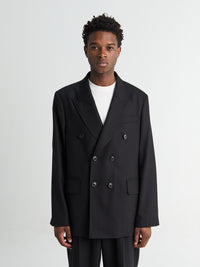
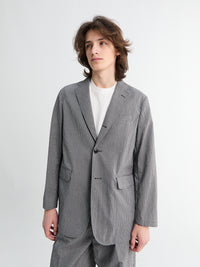
Single-breasted blazers are the most practical starting point. They move comfortably between business casual and smart casual settings, work with a wide range of trousers, and are the easiest silhouette to dress up or down. Double-breasted styles carry more structure and make a stronger visual statement, sitting closer to the formal end of the spectrum. Sport coats, by contrast, are built with a relaxed construction, often unlined or half-lined, which allows easier movement and a less rigid silhouette. Dinner blazers and velvet evening jackets occupy their own formal niche, reserved for occasions where the dress code calls for something deliberate.
Construction matters as much as silhouette. A fully canvassed jacket, where an inner layer of canvas is hand-stitched to the front panels, drapes better over time and moulds to the body with wear. A fused jacket, where the layers are bonded with adhesive, is lighter and less expensive to produce but can lose its shape more quickly. These distinctions are worth checking in product descriptions when you order blazers online through our curated blazer collection.
Fabrics and Seasons
Wool and wool blends are the most reliable year-round choice. Mid-weight options handle the transition between seasons well and hold their structure through regular wear. For spring and summer, linen and cotton are the natural alternatives: both are breathable and lightweight, with linen offering a slightly more textured, relaxed finish. Spring blazers for men in these fabrics work particularly well when cut without a full lining.
In autumn and winter, heavier constructions come into their own. Tweed, flannel, and cashmere blends add warmth without excessive weight, and a well-chosen mens winter blazer in any of these materials is a considered long-term investment. Corduroy and velvet sit at the crossroads of formal and casual, suiting cooler months and evening occasions alike. Fabric choice also affects care: wool typically requires dry cleaning, while cotton and linen can often be hand-washed. We carry blazers from brands that treat premium fabrics and fine materials as a starting point, not a selling point.
Fit and Sizing
The shoulder seam is the single most critical fit point on any jacket. It should sit precisely at the edge of the shoulder, with no overhang onto the arm and no pulling inward. Everything else on a jacket can be adjusted by a tailor with relative ease; the shoulder cannot. The chest should allow a flat hand to slide inside when the jacket is buttoned, and sleeves should end with roughly 1 to 1.5 cm of shirt cuff showing below the sleeve.
Slim fit cuts follow the torso closely and suit leaner builds, while regular fit and classic fit options offer more room across the chest and seat, accommodating a wider range of body types. Contemporary designer collections increasingly include relaxed or oversized silhouettes, which are intentionally roomy and sized accordingly. For men's slim fit sport coats and sport coats slim fit options, sizing down one step from your usual size is often the right call. Always consult the size guide on each product page, as sizing varies between brands.
Occasion Dressing
For business casual and smart casual settings, a structured blazer paired with tailored trousers and a dress shirt is a reliable foundation. Adding a tie moves the look toward formal; removing it and leaving the collar open keeps it polished without being stiff. A blazer over a plain T-shirt with slim chinos or dark jeans is one of the most practical smart casual formulas available, and one that works across a wide range of contexts.
Evening occasions call for a dinner jacket or velvet blazer worn with dress trousers and leather shoes. Off-duty styling benefits from unstructured sport coats layered over knitwear or a casual shirt. Footwear shapes the final register: leather Oxford or Derby shoes sharpen the overall look, while clean leather sneakers or loafers keep things relaxed. Our complete collection of men's apparel includes complementary trousers, knitwear, and accessories to help build a coherent outfit, and our versatile range of men's outerwear extends the wardrobe further into cooler seasons.
Colours and Patterns
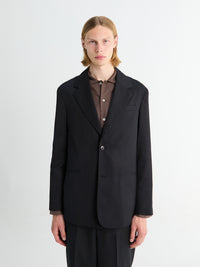
Navy is the most practical starting point. It pairs with grey, beige, white, and most neutral trouser colours, and moves between formal and casual settings without effort. Charcoal is equally strong in business contexts. Mid-grey and camel tones add warmth and work particularly well through autumn and winter. Bolder colours such as burgundy or forest green are better suited to events and evenings where making a considered statement is the intention.
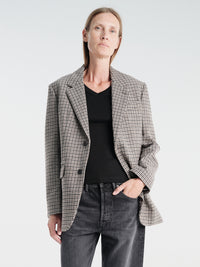
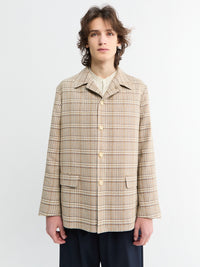
On the pattern side, herringbone and houndstooth add visual texture while remaining relatively easy to style. Windowpane checks and plaid patterns are more expressive and suit sport coat silhouettes well, particularly when the rest of the outfit is kept simple. A patterned blazer rewards careful outfit building, while solid neutrals remain the most straightforward entry point. Our selection spans understated classics and more distinctive pieces for those drawn to a bolder approach, including options that align with current blazers fashion for men.
Construction Details
Lapel style is one of the clearest signals of a jacket's intended register. Notch lapels are the most common and the most adaptable, working across business casual and smart casual contexts. Peak lapels are bolder and carry more formality. Shawl lapels are reserved for evening wear. Button stance (the vertical position of the top button) affects how the jacket frames the torso: a higher stance elongates the silhouette, while a lower stance reads as more relaxed.
Functional buttonholes on the sleeve cuffs are a traditional mark of quality tailoring. Lining choice affects both comfort and breathability: full lining provides structure and a clean interior finish, while half or quarter lining allows more movement and is preferred in lighter fabrics. Pocket style also signals intent: patch pockets read as casual, while jetted or flap pockets are smarter. These are the details worth reading carefully in product descriptions when you shop our selection. For those exploring beyond blazers, our elevated casual sportswear for men and our contemporary selection of women's blazers offer further options across the wardrobe.
Frequently asked questions
What is the difference between a blazer, a sport coat, and a suit jacket?
A suit jacket is designed to be worn exclusively with its matching trousers as part of a suit. A blazer is a standalone jacket, traditionally navy or solid-coloured with metal buttons, that pairs with non-matching trousers. A sport coat is the most casual of the three: it is typically made from textured or patterned fabric, has a more relaxed construction, and is intended to be worn without a matching trouser. In everyday usage the terms are often used interchangeably, but these distinctions are useful when shopping for blazers and sportcoats.
How should a men's blazer fit across the shoulders?
The shoulder seam should sit precisely at the edge of your shoulder, not hanging over the arm and not pulling inward. This is the most important fit point because the shoulder is the hardest part of a jacket to alter. The chest should allow you to button the jacket comfortably with a flat hand able to slide inside. Sleeves should end so that about 1 to 1.5 cm of your shirt cuff is visible. If you are between sizes, it is generally easier for a tailor to take in the body than to adjust the shoulders.
What fabric is best for a men's blazer in summer?
Linen is the most breathable option for warm weather: it is lightweight, has a natural texture, and keeps you cool. Cotton is a close second and tends to hold its shape slightly better than linen. Unlined or half-lined blazers in either fabric are the most comfortable choice for summer. Avoid heavy wool or fully lined jackets in hot conditions. If you need something that works across seasons, a lightweight wool or wool-cotton blend at a mid-weight around 200 g/m² is a practical compromise.
What is the most versatile colour for a men's blazer?
Navy is widely considered the single most versatile blazer colour: it pairs with grey, beige, white, and even lighter shades of blue, and works for both formal and casual occasions. Charcoal grey is a close second, particularly for business settings. If you already own a navy blazer, a mid-grey or camel option makes a strong second purchase. Bolder colours like burgundy or forest green are more occasion-specific but can be excellent statement pieces for events and evenings out.
How do I care for a wool blazer?
Most wool blazers should be dry cleaned rather than machine washed, as agitation and heat can cause shrinkage and distort the structure. Between wears, hang the blazer on a shaped hanger to allow it to air out and recover its form. Use a soft clothes brush to remove surface lint and dust. Spot-clean minor marks with a damp cloth rather than soaking the fabric. Always check the care label on your specific blazer, as blended fabrics may have different requirements.