A studio above a pub
Bank spent his early career as a buyer, with an eye for materials long before he drew a single garment. mfpen began as a passion project, driven by a feel for fabric rather than any ambition to run a fashion house. The studio sits in the old center of Copenhagen, one floor up from a pub.
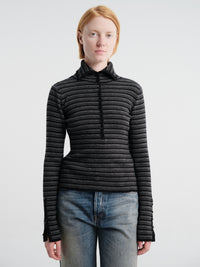
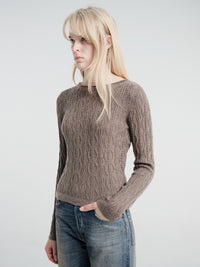
The first years were self-funded presentations with street-cast models, no ads and no influencers. The cult following grew slowly. Womenswear arrived in October 2023 as an extension of the same principles, not menswear scaled down. Bank's own view of growth is dry: why should we be the biggest brand? The official runway debut at Copenhagen Fashion Week came in 2024, and in 2025 mfpen was a semifinalist for the LVMH Prize.
The mfpen silhouette
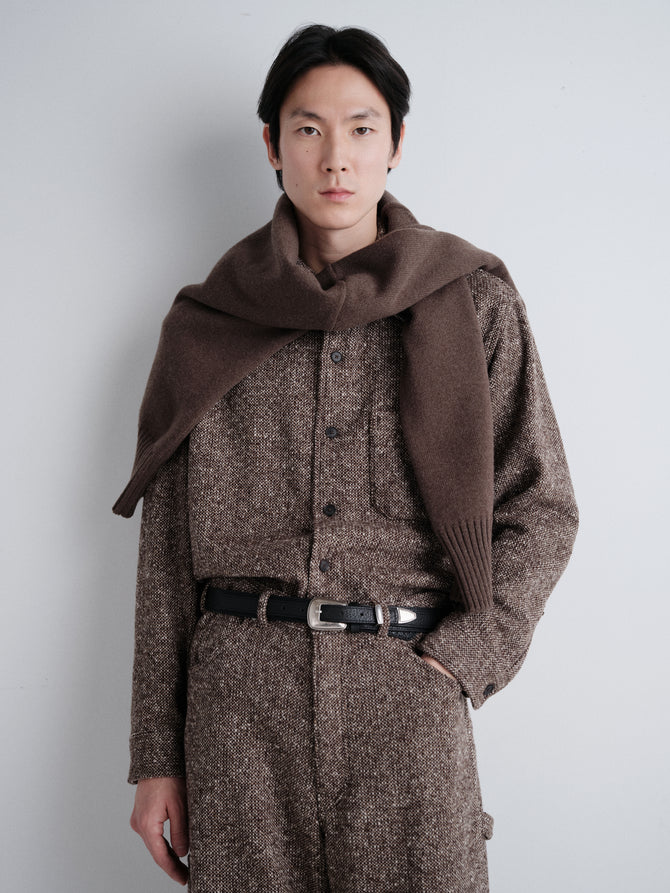
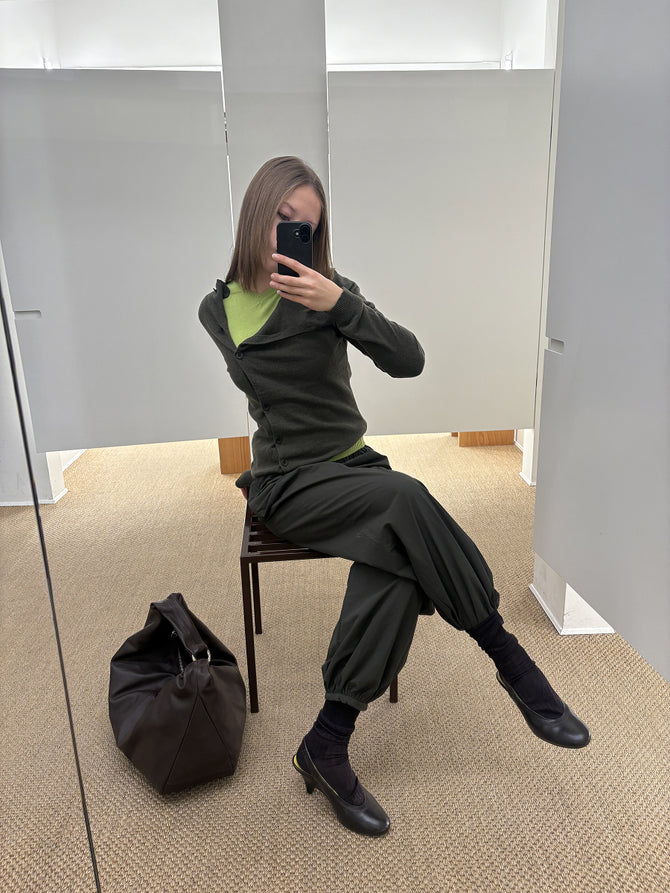
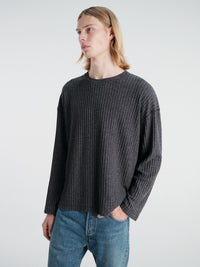
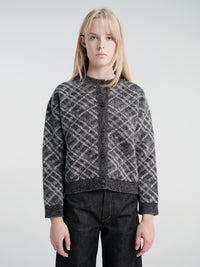
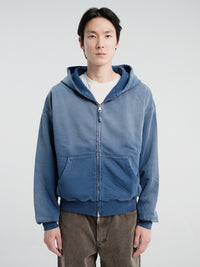
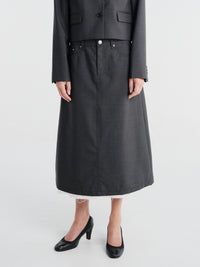
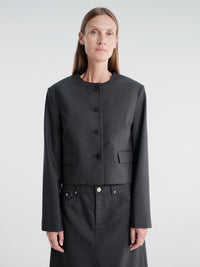
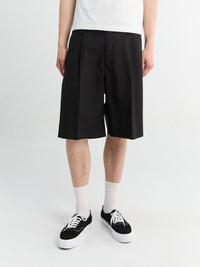
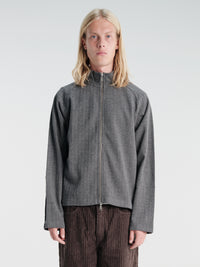
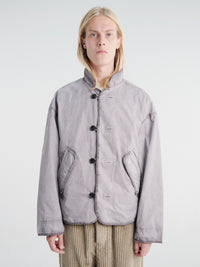
The silhouette is loose and relaxed: roomy pants, large overcoats and heavy knitwear in a muted, earthy palette. The references come from post-punk and hardcore, from Joy Division, Kraftwerk and The Smiths, and from skate culture seen through the eyes of tailoring. The result is neither formal nor casual. It moves between the two.
Bank works on one continuous collection instead of seasonal themes. The label inside each piece reads Herreekvipering, an old Danish word for traditional menswear outfitters. It is Scandinavian restraint with more flavor. The identity is held tightly. Bank once made a pink cardigan on request and regretted it, because he could not recognize himself in it.
Deadstock as foundation
The foundation is deadstock: wool and poplin from Italian mills, ordered and paid for but never used. mfpen buys rolls for current and future collections and so builds its own fabric archive. Production is mainly in Portugal, kept in Europe for quality and control.
Where deadstock does not exist, the brand turns to recycled wool, biodegradable textiles and organic cotton. Sustainability here is a consequence of using what already exists, not a campaign. Runs stay small: a coat may be made in a couple of hundred pieces, and once it sells out it does not return.
mfpen clothing and shirts
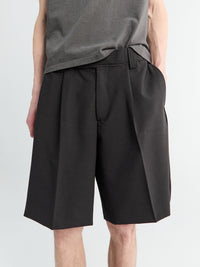
Shirts are the signature: classic shapes in unexpected materials and textures, such as the Priority Shirt and the Vacation Shirt. The menswear collection also covers suiting, blazers, coats like the Installation Coat, knitwear, t-shirts and denim. The idea is a whole wardrobe, with no showpieces and no extra colorways of the same style. The Generation Trousers and the Service Trousers are wide-leg trousers in the collection. Stoy carries mfpen for men and mfpen for women.
Frequently asked questions about mfpen
Is mfpen a Danish brand?
Yes. mfpen was founded by Sigurd Bank and is based in Copenhagen, where the studio sits in the old city center above a pub. Production takes place mainly in Portugal, and many of the fabrics come from Italian mills.
Who is behind mfpen?
The brand was created by Sigurd Bank, a former buyer who is also its creative director. He says he is more interested in garments and fabrics than in fashion as such.
What is mfpen known for?
Relaxed, loose-cut clothing in deadstock fabrics, above all shirts and suits. The look is muted and shaped by post-punk and skate culture. The brand is also known for small runs and almost no traditional marketing.
What does Herreekvipering on the mfpen label mean?
It is an old Danish word tied to traditional menswear outfitters. The label uses it as a nod to classic menswear, which mfpen reads in a looser, more modern cut.
Has mfpen won recognition in fashion?
The brand showed its first full runway collection at Copenhagen Fashion Week in 2024 and was a semifinalist for the LVMH Prize in 2025.