From Izeaux to the Alps
Rémy-Alexis Richard was born in 1878 into a farming family in Izeaux, a village at the foot of the Alps. He trained as a cutter in one of its 20 shoe workshops. He then went to Paris as a factory agent and began hiring his own staff in 1908. In 1910 he married Juliette Pontvert and founded Richard-Pontvert.
A trip to the United States in 1926 introduced him to latex rubber boots, and he brought the material back to a factory in Tullins-Fures. The name joins Para, the Amazon port that exported latex, with boot. Four generations of the family have since run the company.
Paraboot philosophy and character
After the war, cheaper shoes with glued plastic soles took over the market. Julien Richard went the other way and kept to thick leather and large soles for farmers, lumberjacks and shepherds. The company kept to its country roots.
Rémy had always run a more refined line alongside it, with thin leather soles meant for the softest carpets, and that duality endures. Today the positioning is high-end, yet it rejects ostentatious luxury. Rémy himself was self-taught and once rented the Lido to present his collections.
The Michael and other Paraboot icons
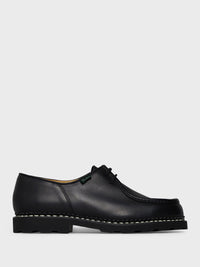
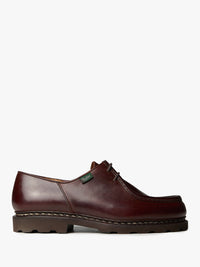
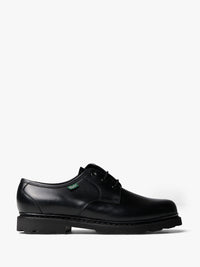
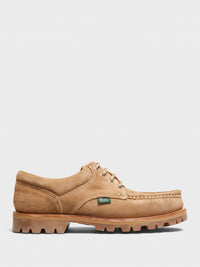
The Michael derby was born in 1945 under Julien Richard. In the 1980s, Italian designers went looking for a thick-soled shoe. It was the Michael they wanted, and the orders that followed saved the company. It remains the signature.
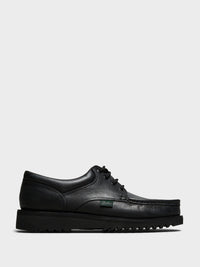
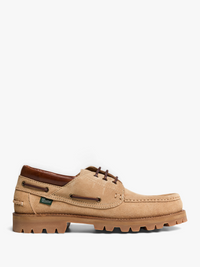
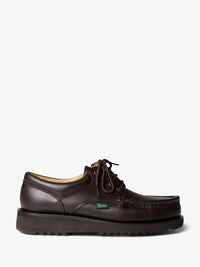
The range now includes Avoriaz and Yosemite boots, Clusaz, Thiers, Barth and Coraux shoes, and women's Michael, Avoriaz and Santorin styles. Many of them pair leather uppers with a rubber sole.
Rubber, leather and Norwegian welt
The construction is as distinctive as the look. Rémy Richard developed a thin rubber sole sewn to the upper and glued with liquid latex to a thicker sole. The soles were then vulcanized in steel molds, baked in an old walnut oil press, another local specialty. Goodyear or Norwegian welt construction lets a sole be replaced when it wears down. Production now sits under one roof in Saint-Jean-de-Moirans, and the company has worked with the same tanneries for generations.
Paraboot in fashion
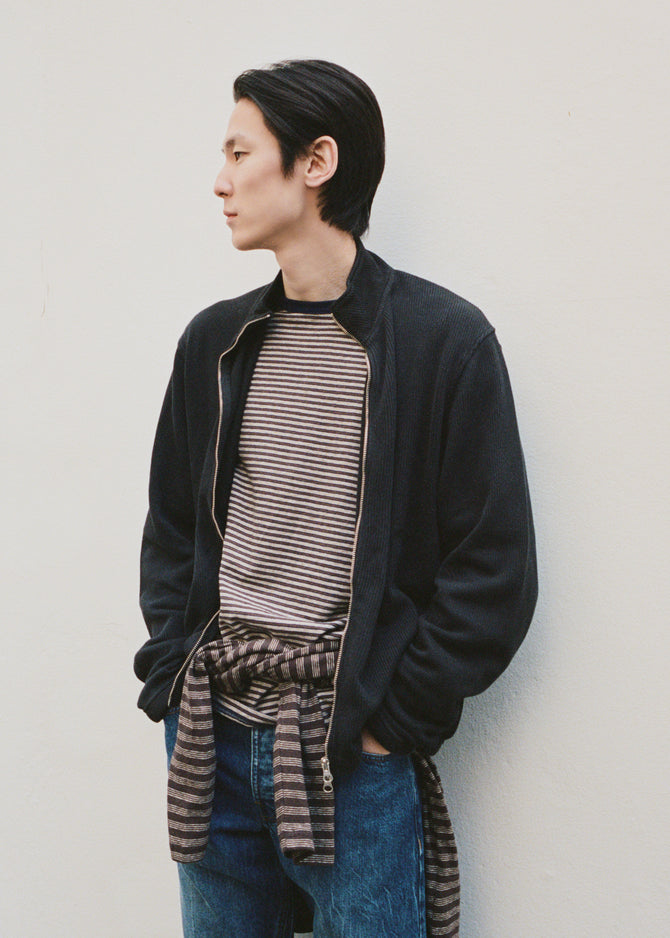
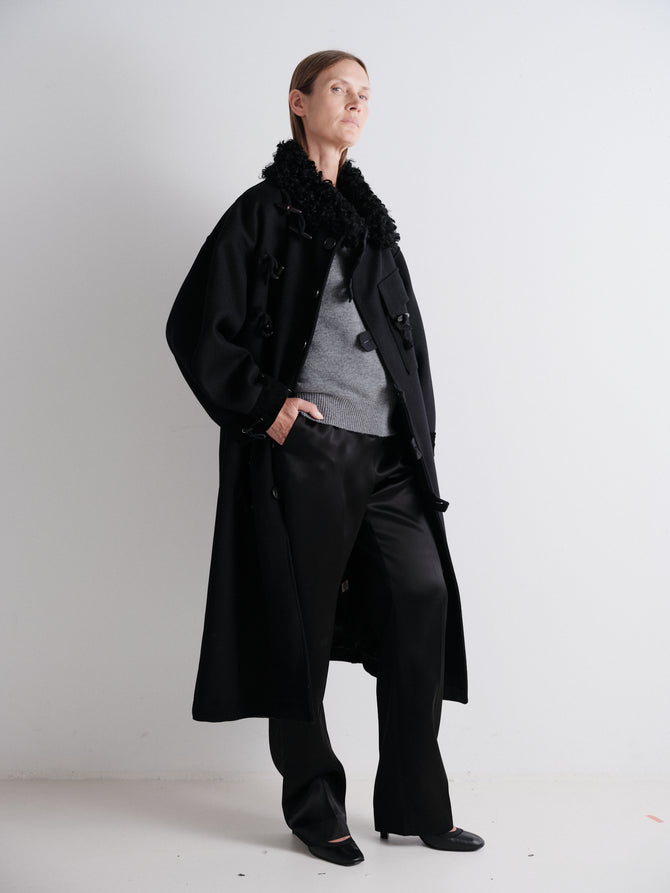
Paraboot has built a following well beyond the workwear crowd. Collaborations include Engineered Garments, The North Face, Kaptain Sunshine, Aimé Leon Dore and Drake's. Universal Works, the British label, built its debut Paraboot collection around the beauty of imperfection, with the Michael rendered in leathers of contrasting texture.
Press has described the brand as beloved by farmers and street-style stars alike. Exports account for about half of sales. See also accessories and sandals.
Frequently asked questions
Is Paraboot a Japanese brand?
No, Paraboot is French. Rémy Richard founded it, and every pair is still made in Saint-Jean-de-Moirans in the French Alps. Paraboot has boutiques in Japan, in Tokyo, Sapporo and Osaka.
Are Paraboots high quality?
Yes. They are built with Norwegian and Goodyear welt constructions, depending on the model. The company buys leather from tanneries it has used for generations. Because of the welt, a worn sole can be replaced instead of the whole shoe being discarded.
Why are Paraboots so expensive?
Each pair passes through many manual steps in a French factory, from cutting and sewing to the welted construction. The company kept production in France when competitors moved to cheaper methods. Long-standing tanneries and rubber soles molded in the company's own workshops are part of how they are made.
Are Paraboots worth the money?
For many owners, yes. A welted shoe can be resoled, so a pair can last for decades rather than seasons. That durability, combined with the handwork and French production, is the case for them.
What is the Paraboot Michael?
The Michael is a derby introduced in 1945 under Julien Richard. It has a thick rubber sole. It became the brand's best-known model and revived the company's fortunes in the 1980s.